


👋 Hey, it’s Shaina, and I’m back for another issue of On Work, the weekly letter on independent entrepreneurship, fractional work, portfolio careers, and more.
If you’re new — hi! Welcome. Help me spread the word by sharing with your friends, and please say hello in the comments.
Before we get into it — If you’ve been thinking about it, we’re nearing our last few weeks to get your Manual Override application in for our April - May 2026 cohort.
One of the things that makes MO special is our guest speakers: You’re not just learning from me and Harry, you’re learning from the top thinkers and doers in the independent work world.
People like Taylor from Fractional Jobs, Milly from Generalist World, and Brie from Build with Brie join us each week to add onto the weekly themes. Tom talks about how he 3x’d his pricing. Ben talks about how he ran a 60 company networking sprint.
If you’ve been curious, we’ve got 2 more free info sessions to learn more and grill me and Harry with your questions. Come and say hi!
Hope to see you there! Now onto today’s issue.
Everyone asks me the same question
It comes up at dinner, in DMs, on coaching calls. Someone hears “portfolio career” and goes: Wait, what do you actually do? What does that look like day to day?
They can picture freelancing. They can picture a full-time job. But they can’t picture Tuesday afternoon when you have three clients, a coaching session, and a newsletter to ship.
I had a hard time picturing it too before I was living it.
So I decided to stop just answering it myself, and asked 11 people from the Hello Generalist and Manual Override communities to open their portfolios and show everything: what they work on, how they structure their time, what tools they use, how clients find them, and what they charge.
These aren’t influencers performing success on the internet. They’re operators in the middle of building their businesses — some a year in, some just getting started, all figuring it out.
Here’s who you’ll hear from:
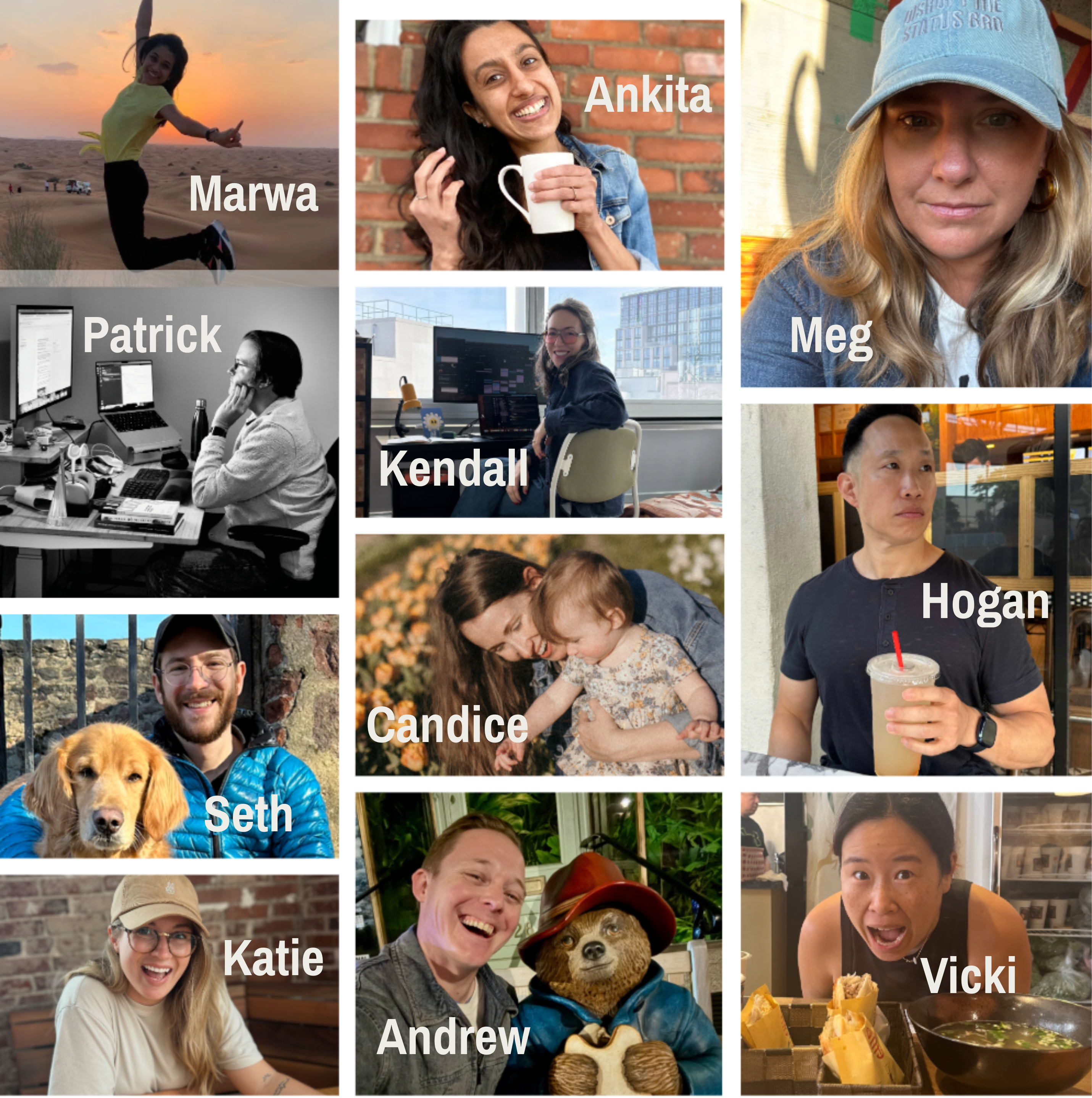
Meg Scheding: fractional PMM who also runs Strategic Pivotery, a newsletter and community for women going independent
Vicki Yang: fractional HR leader, advisor, and executive coach (victoriayang.com)
Patrick Brand: fractional L&D and chief of staff for startups
Katie Barnes: fractional COO who runs revops sprints for early-stage founders and writes Systems & Side Eyes
Ankita Terrell: entrepreneur coach and fractional AI implementation advisor, creator of the Neuroplasticity Blueprint
Marwa Muhammad: fractional product and strategy for AI startups, plus enterprise AI workshops. Building Nokshi.
Candice Lewis-Steinman: fractional product marketing leader and creator of Hey Mom!
Hogan Lee: fractional COO, advisor, and mentor for VC backed startups
Kendall Crocker: fractional strategy and ops for early stage VC backed startups supporting GTM and fundraising. Building Sliced Bread.
Andrew Daub: fractional chief of staff and executive coach (Studio Groovy), and mentor working across nonprofits and ed-tech
Seth Nachimson: “Chief of Staff as a Service” for Seed and Series A teams
I wrote this with an editorial lens, trying to pull out trends and show a broader story. But there is so much wisdom in their full responses. I’ve dropped their original submissions here if you’d rather read person by person.
The people want flexibility. Give the people what they want.
A whopping 36% percent of US workers now identify as independent, up from 27% in 2016 (hat tip McKinsey). LinkedIn profiles listing “fractional” went from about 2,000 to over 110,000 in two years.
And it’s not just people delivering groceries: Business Talent Group’s latest report shows a 170% increase in demand for on-demand leadership roles since 2022, and Gartner forecasts that by 2027, nearly a third of midsize companies will have at least one fractional executive on retainer.
Friends, this is not a trend. This is a new wave.
Here’s what that looks like when you zoom in on our cast of characters:
Hogan is running fractional COO for a healthcare AI startup while advising two VC-backed companies and mentoring for a global VC firm.
Candice has three product marketing clients and just pitched a fourth.
Marwa is juggling two fractional clients, an equity advisory role, and enterprise AI workshops launching next month.
Ankita is coaching entrepreneurs, building a methodology she’s been developing for years, and doing fractional AI implementation with a VC partner.
Kendall is working across fintech and CPG on two continents — advisory, fractional, and project-based — and she’s about to start a post-merger integration sprint.
Andrew is doing fractional chief of staff at a nonprofit for about 15 hours a week, ramping up a revenue and growth lead role at an ed-tech org, and running executive coaching, mentoring, and advising on the side.
Seth has three clients simultaneously — a six-month healthcare AI engagement, a data platform startup he just kicked off (via Hello Generalist, actually), and a third starting next week for a seed-stage founder buried in ops.
And me? I run Hello Generalist, a fractional work marketplace that’s a productized service. I co-run Manual Override, which we hope will spring up a few times a year. I have two coaching clients and some modest real estate income.
These are multi-dimensional careers with real structure.
Hustle culture? Opting out?
When people hear “multiple clients,” they picture one of two things.
The first: someone grinding 80-hour weeks, romanticizing the chaos.
The second: someone who just doesn’t want to work. Checked out. Couldn’t hack it.
Neither is right.
Look at the actual hours:
Ankita works 10-15 hours a week.
Vicki does 25-30.
Hogan puts in around 20 on his COO role plus advisory.
Candice ranges from 30 to 50.
Katie does 30 hours of client work and 10+ of biz dev.
Seth flexes up to nearly full-time during certain stretches — then backs way down for hiking season.
The range is enormous. And the range is the point.
This isn’t about working more or working less. It’s about working deliberately. Every person in this piece chose their structure.
Ankita: “Being independent has given me so much freedom to design the kind of life I want where I get to be with my 21 month old, enjoy our days, go do things for myself outside and yet do really meaningful and fulfilling work.”
Candice put it more bluntly. When I asked for a photo, she sent one of her with her sweet little girl at a farm: “Everything I do is so that I can spend more time and be a better mom. I literally just want to be the best mom ever, and my job allows me to do that.”
Andrew talks about it from the self-care side: “Therapy, acupuncture, sidewalk chats with your bestie. Taking care of your needs and managing your own energy are critical; otherwise, the doubts, insecurities, fears, and stress can become so all consuming that you may just give up, exactly at the moment when you should be betting on yourself even more.”
Seth on the lifestyle toggle: “I’ll flex up to something close to a full-time workload during certain stretches, which gives me the financial runway to flex back down when I’d rather be outside. I hike a lot in the fall. That matters to me, and this model lets me protect it.”
But these people aren’t opting out of ambition, either.
Candice: “I didn’t realize that this was an option. I thought that people only did fractional work if they couldn’t find a real job. Jokes on me.” Name the stigma, then flip it. She’s running a real business.
Ankita interviewed through six rounds for a $300k-a-year role. It didn’t work out, and she’s not devastated. “I am just so confident talking about myself and my skills and knowing that we are in the future of work now.”
Patrick made 50% more in his first year independent than any full-time salary he’d ever had.
Hogan calls it “a full contact sport. Going independent requires a lot of intentionality and focus.”
Katie spends 30 hours a week on client work AND 10+ on business development. That’s not someone who doesn’t want to work.
Marwa is running two fractional clients, an equity advisory, and enterprise AI workshops — doing all the prototyping herself with AI tools. “It’s actually a lot of fun work.”
The real shift isn’t about hours. It’s about who decides what success looks like. These people decided for themselves.
Why this is the smartest thing you can do right now
Do I really need to spell this one out? Portfolio careers let you design your life around what actually matters to you, not around someone else's org chart. You get to choose the work, the hours, the people, the pace. And when one piece shifts, you adjust the mix instead of starting from zero.
Portfolio careers are the opposite: diversified income, diversified skills at play, diversified relationships. If you're willing to put in the work, you get to own the outcome.
Patrick: “It feels like traditional full-time work is more precarious than ever, and there’s tremendous liberation (and confidence-building!) in having a diversified income and in not having to worry about being the target of the next layoff.”
Seth gave a great metaphor: “I think of it like a camera tripod. Three legs: stable. Two legs: wobbly but workable. One leg: you’re surviving, not thriving.”
Vicki on what happens when it works: “When my capacity opened up and it came time to search for more leads, I wasn’t afraid. Anxious, a little, but not fearful.”
Andrew on the deeper meaning: “Going independent can also mean that you’re taking your own power back, that you’re willing to put the time, heart, courage, and muscle into building your life and career as a real architect, on your own terms.”
Hogan gets at the financial discipline behind the anti-fragility: “It really helps to understand your own P&L and how to manage those cycles.”
Kendall’s portfolio spans fintech and CPG, US and London: if one sector contracts, the other leg holds. And she’s building AI agents to free up even more capacity. The portfolio itself keeps evolving.
Katie puts the tradeoff plainly: “Do it if you’re excited to build your own pipeline and relationships, not just deliver great work. The freedom is real, but so is the responsibility.”
What the work actually looks like
This is the section I wish someone had written for me three years ago.
How clients come in
Hogan’s first client came through a distant connection — weak ties matter.
Andrew’s three biggest clients all started with rekindling old relationships.
Seth’s longest client started with a text the day he left his full-time role.
Meg’s referral pipeline is her entire biz dev strategy.
Kendall’s clients come from two distinct worlds — legacy VC network and NYC personal communities.
Marwa won a client from a cold email.
Me — after three years of writing on LinkedIn and Substack, almost everything is now inbound.
Katie is direct about it: “Having even a simple plan for outreach, referrals, and consistency matters more than having the perfect website.”
Tools and systems
Here’s the run down.
Meg built what she calls her “Freedom Stack” — Lettuce for S-corp taxes, Dex for CRM, Fathom AI for meeting notes.
Vicki uses Reclaim to sync calendars across clients and Timely to track time.
Candice has a Timely-to-QuickBooks invoicing pipeline.
Hogan runs lightweight operational dashboards in Airtable.
The unsexy stuff matters too.
Patrick pays for health insurance directly through BCBS.
Marwa is still doing invoicing manually — “which I need to improve,” she admits.
Andrew uses Monty and TurboTax — “you’re on the hook for self-employment, baby.”
Seth is organized as an LLC, carries insurance, and makes every client sign a contract. He uses Wave for bookkeeping because “I can’t stand QuickBooks.”
AI tools are everywhere but used differently.
Ankita vibe-codes with Lovable.
Marwa uses Cursor and Claude Code for prototyping.
Kendall plays Claude, Gemini, and Perplexity off each other for market research and is building her own CRM agent.
Seth: “I’ve found Claude better for most of my actual work — it stays on task, the output quality is higher. ChatGPT I’ll reach for when I want to think out loud verbally.”
My own stack is increasingly built around Wispr Flow, Claude, and n8n for automations. (I wrote about it last week, here.)
How it’s structured
The range of models is striking: embedded fractional (Patrick at 30 hrs/wk, Hogan at 20, Andrew at 15), retainers (Meg, Vicki), sprints (Katie, Marwa), advisory/equity (Marwa, Andrew), coaching (Ankita, Andrew). My portfolio includes a productized service and a cohort-based accelerator.
Seth starts new clients hourly for the first month, then moves to retainer. “Keeps it flexible and builds trust for both sides.” He’s also firm on boundaries: “If you message me at 10pm, you’re hearing from me the following day. Founders need to practice discernment about what’s actually urgent.”
What people actually charge
Nobody talks about this, and the opacity hurts everyone, especially people starting out who have no idea what’s normal. These people sharing openly is generous and courageous.
Meg: $250-400/hr for fractional PMM. More for strategic advisory. Her 2026 manta? “The price has gone up.”
Candice: $250-400/hr, billed hourly. “I like to charge by the hour to make sure that I’m getting paid for my time.”
Andrew: ~$250/hr fractional, adjusted by scope. Executive coaching: $250-650/session sliding scale.
Vicki: ~$185/hr average across retainers. Transparent on her website.
Ankita: Coaching: $10-15k for six months. AI implementation: $10k/month.
Katie: Shared the moment it clicked: “Am I pricing things based on value… or based on what won’t scare someone away? Then a prospect accepted a $12k sprint project, and it genuinely clicked: the flinch test is real, and I was flinching before clients ever did.”
Seth: Kept numbers private but: “I make meaningfully more as a 1099 than I did as a full-time employee, even accounting for the shift in tax burden.”
Andrew also shared a story about walking away from money. He came in with a 25% partner discount and received a counter at 80% off. “Do I shut up and take the money and be grateful, or do I leave with my worth and dignity more intact?” He walked away. The further out he gets, the more conviction he has.
The range — $185/hr to $400/hr — is wide. Functional area, engagement type, and structure all matter. But the fact that these numbers are visible at all? Hell yeah.
If you’re on the fence
I asked everyone some version of: what would you tell someone who’s thinking about this but hasn’t made the leap? Their answers were better than anything I could write.
Seth made the lowest-stakes case I’ve heard: “If you’re already job hunting, there’s almost no reason not to explore a fractional or consulting engagement at the same time. The downside is minimal.” You don’t have to burn anything down. You can try it while you’re still looking.
Kendall needed someone outside her inner circle to say it out loud. She had a chance encounter — a 15-minute free career coaching session with someone who didn’t know her personally but understood her background and capabilities — “and that was the push I needed to really consider it.” Sometimes you just need one person to say you should do this who isn’t your mom or your best friend.
Ankita is honest about the friction: “It isn’t always easy because no one is holding you accountable but you yourself, but its so so so worth it.”
Now the real talk.
Hogan doesn’t sugarcoat it: “You also have to become a hunter. Business development and sales are not optional. You have to consistently budget time to build a pipeline.” And: “In the beginning especially, it can be feast and famine. There are periods where opportunities come easily and then periods where things go quiet.” That’s real. If the idea of selling makes you want to crawl under a table, this path will force you to get over that — or it won’t work.
Meg learned it the hard way: “I had the clients. I had the track record. I had the opinions (obviously). What I didn’t have was a system... Turns out osmosis is not a business strategy?!” She also has great tactical advice: “Do the math on your runway before you need it, not when you’re already panicking. The healthcare piece especially — it’s either the thing that stops people or the thing they don’t figure out until it’s a crisis. Figure it out first.”
Hogan landed on something I think about a lot: “The biggest lesson for me was simply to start and not let perfect get in the way of good enough. The feedback loop from the market and from your network is what helps you refine things.” You’re not going to have perfect positioning, a perfect website, or a perfect pitch before you start. You’re going to get those things because you started.
And Vicki on why you shouldn’t try to figure it out alone: “Even if we’re solopreneurs, we shouldn’t be doing this by ourselves.”
So, what does it actually look like?
For our 11 people here, it looks like 11 different things.
There is no one portfolio career. There are just people building what works for them, and being honest about what that takes.
If you’re reading this and thinking could I do this? — you probably can. The people in this piece aren’t superhuman. They’re operators who got clear on what they wanted and started building toward it. Some of them started with a text from a founder. Some started with a cold email. Some started because someone told them in a 15-minute coaching session that they should consider it.
You don’t need to have it all figured out. You just need to start.
Seth said something I want to leave you with: “I’ve never regretted trying something that didn’t work out. I have regretted not trying.”
I’d love to hear from you in the comments: if you’re already building, what’s in your portfolio? Or what keeps you from starting?
Before we head out, a few shameless plugs. If you’re into the ideas I write about, here’s a few ways for us to work together:
If you’re a fractional, consultant, coach, or other flavor of independent operator wanting to build real sustainability in your business, check out Manual Override’s spring cohort — and come to our info sesh on March 18!
Want 1:1 time with me to talk about building your independent business? I’ll show up judgement free and candid, and make this hour a super valuable one for you. You can read more and book that here.
If you’re a startup who’s curious about fractional hiring, or a startup operations pro pursing fractional work, check out Hello Generalist.
Thanks for reading! Until next time, Shaina
Those small invoicing and calendar systems are easy to overlook. I would test a client handover through them before adding another tool: what still needs the operator’s memory?
I enjoyed this. Thank you for breaking it down between several people. It’s interesting to see what other people do.